
Regardless, Merry Xmas
Despite all, Merry Xmas one and all.

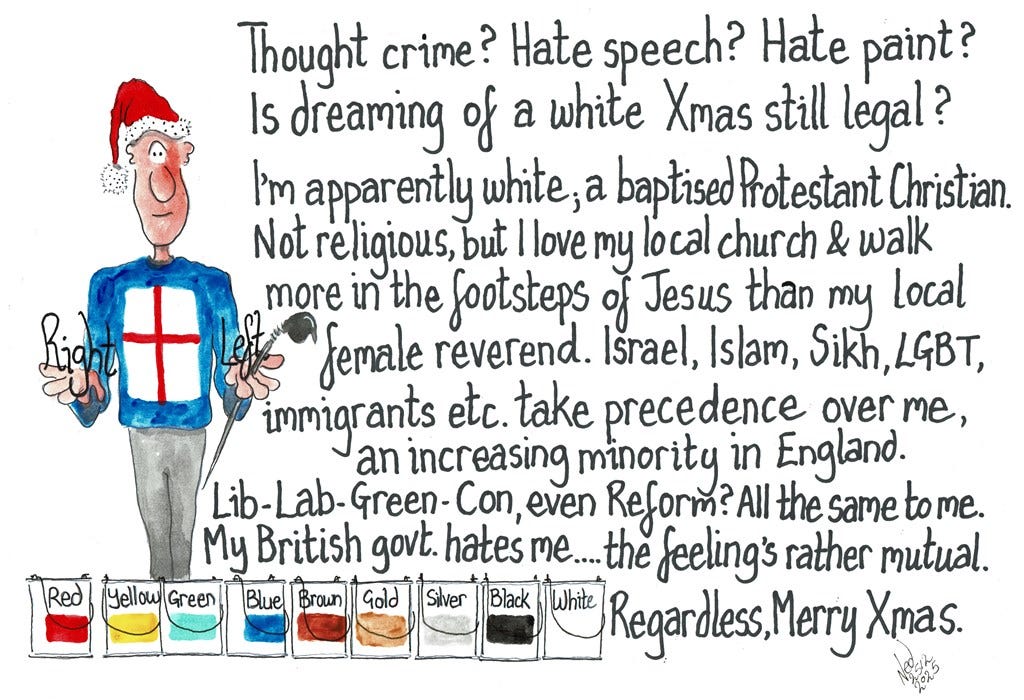
Corresponding Artwork Notes Of Reference And Self-Indulgence
Despite the likes of British ‘journalist’ aka propagandist Lord Daniel Finkelstein OBE who bemoans that his entire family were turned into the fictitious lampshades and soap and then bemoans those who reference such things, I wish you a very Merry Xmas. Lord Finkelstein won’t be watching this at Xmas or any other time:
https://rumble.com/v2rqiva-documentary-spinning-squirrel.-psychological-warfare-propaganda-and-fake-hi.html
This bastard…
https://rumble.com/v73ck0u-finkelstein-calls-for-jewishmuslim-alliance-to-prevent-holly-2.0.html
Situl who I’ve met once at a megalith conference in Marlborough, sent me this video and ‘Merry Xmas’ wishes on Xmas Day.
ARC : America Russia China. Bye Bye British €U Rules Based Order. Just making a note.
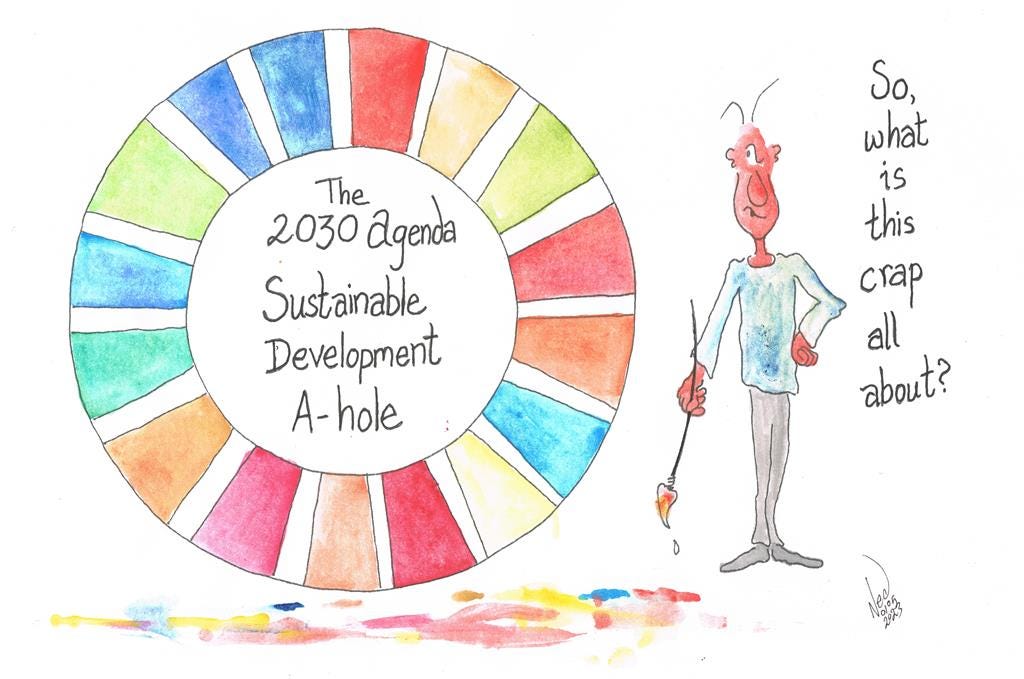
Interesting? It's terrifying. This is Agenda2030
https://assets.publishing.service.gov.uk/media/5a75176e40f0b6360e47348f/Agenda-2030-Report4.pdf
‘Confiscation doesn’t have to feel like violence, it can feel like compliance.’
An artwork from May 2023…
The fat bug at BIS.
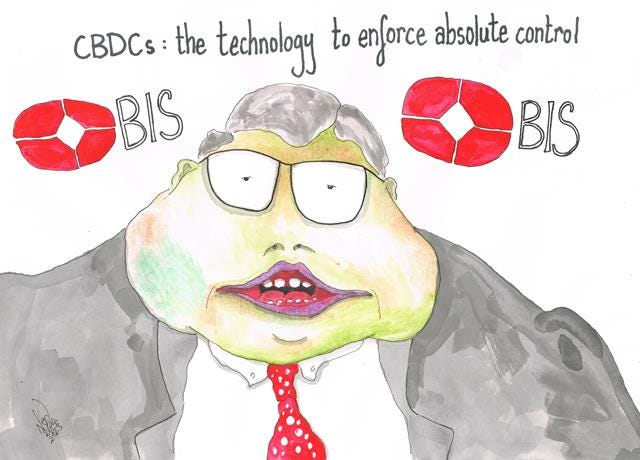
CBDCs : Central Bank Digital Currency
https://www.bis.org/
“We don’t know who’s using a $100 bill today, and we don’t know who’s using a 1,000-peso bill today. The key difference with the cbdc is the central bank will have absolute control on the rules and regulations that will determine the use of that expression of central bank liability, and also we will have the technology to enforce that.”
Augustin Carstens, The General Manager for the Bank for International Settlements
24 mins…
A note some one sent me. He may have asked AI…
During times of war, the United Kingdom has relied on emergency powers to maintain government authority and ensure national security. The most prominent example is the Defence of the Realm Act (DORA) of 1914, which was passed just days after Britain entered the First World War on 5 August 1914. DORA granted the government unprecedented powers to rule by decree, effectively suspending the sovereignty of Parliament and key aspects of the rule of law, which are central to the UK’s unwritten constitution. The Act allowed the executive branch to issue regulations—known as Defence of the Realm Regulations (DRRs)—through Orders in Council, bypassing the need for parliamentary approval. This enabled the government to control critical infrastructure, censor communications, and detain individuals without trial, particularly under DRR 14B, which was used to intern thousands of Irish Republicans during the Irish Republican insurgency after the 1916 Easter Rising.
Although DORA established what scholars describe as a ‘commissary dictatorship’—a form of emergency rule where executive power is significantly expanded—its implementation was tempered by a pragmatic approach. Under Prime Minister Herbert Asquith, government ministers were initially reluctant to use these powers aggressively, fearing they would contradict British liberal ideals and provoke domestic resistance. Instead, the government often relied on indirect methods, such as co-opting patriotic organizations and encouraging spontaneous public mobs to suppress dissent, to avoid the appearance of authoritarianism. However, as the war progressed and conscription was introduced in January 1916, and especially after David Lloyd George became Prime Minister in December 1916, the use of emergency powers became more assertive.
The royal prerogative also plays a key role in wartime governance, allowing the government to declare war and deploy armed forces abroad without parliamentary consent, although this practice has evolved—such as the 2003 Iraq War, which was preceded by a parliamentary vote, sparking calls for future conflicts to require similar approval. The use of the royal prerogative in wartime has been subject to judicial scrutiny, as seen in the 1915 Shoreham Aerodrome Case, where the House of Lords upheld the Crown’s right to occupy private land for military purposes under both statutory regulations and prerogative powers.
In more recent history, the UK has postponed general elections during wartime to maintain stability. For example, the 1940 general election was postponed due to World War II, and a new election was held only in 1945 after the war ended. This demonstrates a pattern of prioritizing national security and continuity of government over democratic processes during conflict, reflecting a long-standing tradition of wartime rule to keep government in power.
Is Trump a positive or negative? Goodness knows.
Trump is a disaster
Trump’s making waves
My Tweet:
https://x.com/NedPamphilon/status/2002836059445674300
‘Interesting, especially @GarlandNixon‘s experience in Russia. Even @TFL1728, who blocks me on X, was interesting; I think I upset him re my King Crimson comments.
Well done @CryptoRichYT
I’m still perplexed by Trump.
F Israel!
God or Darwin or what?
https://rumble.com/v731ytk-world-leading-scientist-on-the-evolution-myth-super-humans-genetic-engineer.html
Boxing Day tomorrow. What’s Boxing Day? The day after Xmas Day in England. Oh how I hope Candace Owens is correct about Mrs. Macron, though I suspect she isn’t, but I really, really want her to be proved right; just for the sheer fun of it.
-o0o-
As a wag once said,
‘The artist must go very far, so that the ordinary man will go far enough. Arsenal!’
‘There are few things more dishonourable than misleading the young.’
Thomas Sowell
Yurtta Barış Dünyada Barış : Peace At Home, Peace İn The World… if only.
Previous:
https://nedpamphilon.substack.com/p/british-plan-to-dissolve-english
Merry Christmas... COYG
Wow, it's quite a take to link these historical narratives with the future of finance and digital currencies. While the central bank control over CBDCs you highlighted certainly sparks important discussions about individual privacy, what measures do you think would be essential to ensure any AI integration in these sistems upholds democratic principles and prevents undue surveillance?